Wholesale prices direct from the exporter

Wiremap / Poe Tester
The Complete Guide for Structured Cabling Professionals
4/23/20257 min read
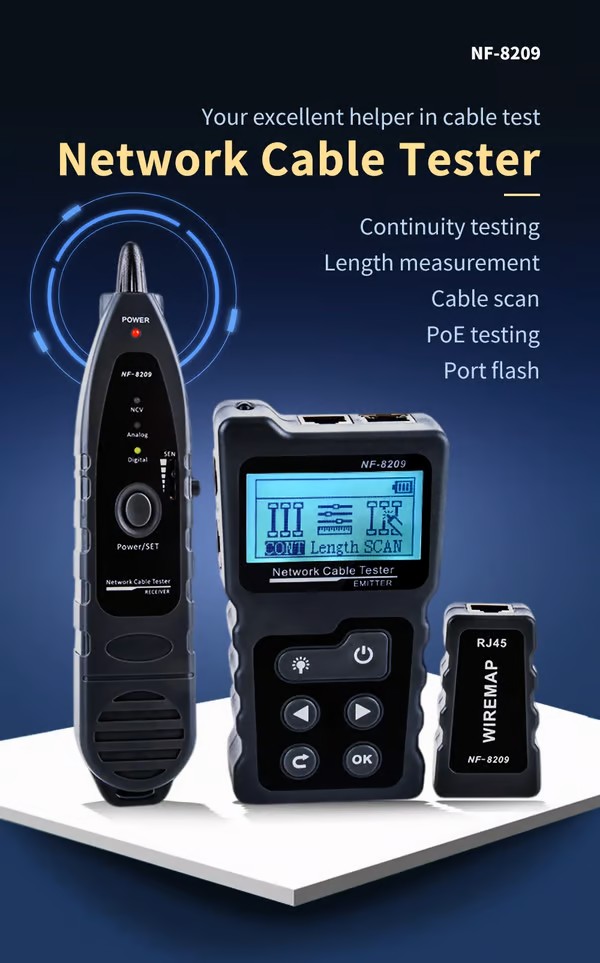
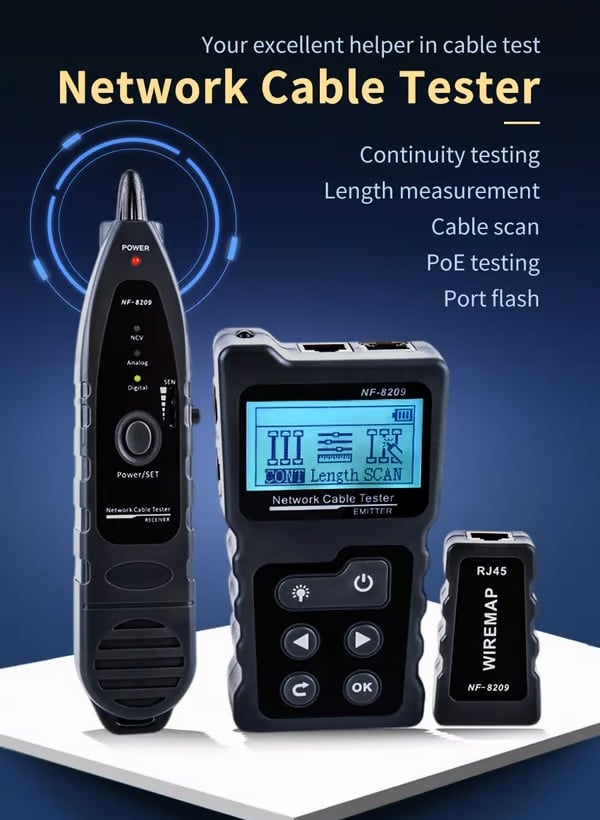
What is a Wiremap and a PoE tester?
The Wiremap and PoE Tester are specialised tools used for testing and maintaining structured cabling networks, such as those using Cat5 and Cat6 standards. This type of device is crucial for ensuring the integrity and functionality of network connections, as its primary function is to check the continuity and correct configuration of the wire pairs within the cable.
Tests carried out with a Wiremap involve analysing the connection of individual wires to the ports, ensuring there are no faults, short circuits or cross-connections that could affect data transmission. This type of check is not only essential for the initial installation of networks, but also for diagnostics during routine maintenance. When a cabling system presents problems, carrying out this test can save a significant amount of time by enabling the source of the fault to be identified quickly.
In addition to the Wiremap function, many of these devices also incorporate Power over Ethernet (PoE) technology. The PoE standard allows the same network cable used to transmit data to also supply power to devices such as security cameras and VoIP phones. Consequently, a test that combines both features offers comprehensive support to network professionals, enabling them to verify PoE operation and power whilst testing cable continuity.
As such, the use of a wiremap and PoE tester is essential for structured cabling professionals, as it ensures that the cables are functioning correctly and that power is delivered effectively, thereby contributing to a more reliable and efficient network environment.
The Importance of Testing in Structured Networks
Testing structured cabling networks, particularly in environments that use copper pairs, plays a vital role in maintaining the integrity and efficiency of communication systems. Carrying out regular and comprehensive tests not only ensures connectivity between devices, but also prevents a range of problems that may arise due to faults in the network infrastructure. By using a wiremap and PoE tester, professionals are able to identify potential faults in cables, connections and other critical components, thereby ensuring optimal performance.
Network efficiency is often compromised by factors such as electromagnetic interference, poor contact at cable terminations, or even material degradation over time. These issues not only affect data transfer speeds but can also lead to costly downtime. Pre-deployment network testing helps to identify and resolve these issues before they manifest as major failures, contributing to a more reliable and productive corporate environment.
Furthermore, proper testing allows you to verify the performance of network equipment, such as switches and routers, ensuring that they are operating within the recommended specifications. This is particularly critical in setups where multiple devices are connected within the same environment, as a bottleneck at a single point can affect the entire network. By carrying out these tests, network administrators can otimize resource allocation and ensure that the infrastructure can support current and future traffic demand.
Therefore, the importance of testing structured networks cannot be underestimated. By ensuring that all components are functioning correctly, network professionals can guarantee seamless connectivity, efficient communication and, above all, the reliability required for corporate environments that depend on technology for their day-to-day operations.
Device Features and Functions
Wiremap and Power over Ethernet (PoE) testers are essential tools for structured cabling professionals. They offer a range of features and functions designed to facilitate the installation and maintenance of networks. One of the key features is continuity testing, which allows you to check whether cables are correctly connected and whether data transmission can take place without interruption. Continuity is essential to ensure the effective operation of a network, as a poorly connected cable can lead to serious connectivity issues.
Another important feature is polarity checking. This feature ensures that wires are connected with the correct polarity, preventing damage to connected devices and communication failures. Polarity checking is an essential step during the installation of new cables, allowing installers to identify and correct problems before they become critical.
Furthermore, insulation resistance is a feature that measures the integrity of the cables, checking that they are free from short circuits. This is crucial for the safety and efficiency of the network system, ensuring that electrical power does not cause interference or damage to transmitted data.
PoE testers, in particular, have been gaining prominence in the market due to the growing demand for power over network cables. These devices are capable of testing and verifying the power delivery capacity of cables, ensuring that devices such as IP cameras and wireless access points are receiving the power required to function optimally. With various models available, it is essential that professionals choosing a tester consider their specific needs and the features on offer to select the most suitable tool for their applications. The integration of all these features makes wiremap and PoE testers indispensable for ensuring the efficiency and reliability of structured networks.
How to Choose the Right Wiremap and PoE Tester
Choosing the right cable tester, particularly a wiremap and PoE tester, is essential for structured cabling professionals. Several factors must be considered during this process to ensure the device meets the specific needs of the job. One of the first aspects to consider is the tester’s compatibility with different types of cables, including CAT5, CAT6, and even fibre optic cables. Versatility in compatibility can save time and increase the efficiency of the tests carried out.
Another important factor is the equipment’s ease of use. A wiremap and PoE tester with an intuitive interface and simplified operating options can minimise the learning curve, allowing a technician to quickly familiarise themselves with its features. Additional features, such as large digital displays and automatic test functions, can facilitate the execution of tests in different conditions and environments.
Battery life is also a criterion to be taken into account, particularly for those who frequently work in remote locations where access to mains power may be limited. A tester with a long battery life promises greater convenience and efficiency, minimizing interruptions during work.
Price, of course, is a decisive factor for many professionals. It is important to strike a balance between cost and quality. Products from trusted brands, such as Fluke Networks, Klein Tools or Ideal Industries, often offer test equipment that guarantees superior accuracy and durability. Before purchasing, it is advisable to check user reviews and product recommendations to ensure you choose the ideal wiremap and PoE tester for your needs, thereby providing a satisfactory return on investment.
Step by Step: How to Test Network Cables
To ensure that the network infrastructure is functioning correctly, it is essential to test network cables using a Wiremap and PoE Tester. This guide provides a practical and detailed procedure that can be followed by both beginners and professionals in the field.
First, start by preparing the cable to be tested. Check that the cable is in good condition, with no cuts or visible damage. If necessary, use a cable stripper to remove the outer insulation, exposing the inner wires. Arrange the wires according to the T568A or T568B standard, which are the most commonly used pinout configurations.
Once the cable is prepared, connect one end of the cable to the Wiremap Tester connector and the other end to an adapter or to the port corresponding to the device being tested. Ensure that the connections are firm and secure to avoid inaccurate results. If the test is being carried out on a Power over Ethernet (PoE) system, check that the device powering the cable is also switched on and operational.
Once the connections have been made, switch on the Wiremap Tester. The device will begin testing the cable, emitting signals and lights that indicate the quality of the connection and the correct pin configuration. It is important to note the results displayed on the screen. A successful test will indicate that all wire pairs are functioning correctly, whilst faults will signal problems that need to be rectified.
This process is essential for maintaining an efficient structured cabling system and minimises the risk of communication failures. By following these steps carefully, network professionals can ensure a secure and optimised installation. It is recommended that test results be documented for future reference and maintenance.
Common Mistakes and How to Avoid Them
When using Wiremap and PoE testers, structured cabling professionals often encounter a number of obstacles that can compromise the effectiveness of their tests. One of the most common errors is the incorrect identification of cables. This usually occurs when the professional fails to properly check the type of cable in use, leading to erroneous diagnoses and the performance of tests that do not reflect the true condition of the network. To avoid this problem, it is essential to inspect the cables before starting the tests and ensure that they comply with the necessary specifications.
Another frequent error relates to connection issues. Technicians often encounter poorly fitted or damaged connectors. These faults can result in inaccurate readings and make it difficult to identify problem areas in the network. To mitigate this risk, it is recommended that connectors are thoroughly checked before testing begins, ensuring that all components are in good condition and correctly connected.
*** Translated with www.DeepL.com/Translator (free version) ***
A interpretação errônea dos resultados também pode levar a conclusões incorretas. É comum que os usuários não compreendam completamente os dados apresentados pelo Wiremap e PoE Testers, o que pode levar a tomadas de decisão inadequadas. Para evitar essa situação, é aconselhável que os profissionais se familiarizem com os manuais dos dispositivos e que realizem treinamentos para aprimorar suas habilidades na interpretação de resultados. Além disso, comparar os resultados obtidos com dados históricos pode ajudar na confirmação da precisão dos testes realizados.
Por meio da conscientização sobre esses erros comuns, os profissionais poderão maximizar a eficácia de seus testes com Wiremap e PoE Testers, garantindo redes estruturadas mais robustas e confiáveis.
Tendências Futuras em Testes de Redes
À medida que a tecnologia de redes evolui, os testes de redes também passam por transformações significativas. Entre as tendências emergentes, a automação destaca-se como uma ferramenta fundamental. Com o aumento da complexidade das infraestruturas de redes, uma abordagem manual para testes já não é prática. A automação permitirá que os profissionais realizem tarefas repetitivas com maior precisão e em menor tempo, resultando em eficiência aprimorada e redução de erros humanos.
Outro aspecto crucial a se considerar é a integração dos Wiremap e Poe Testers com software de gestão de rede. Esta integração possibilitará o monitoramento em tempo real do estado da rede, facilitando a identificação de problemas potenciais antes que eles se tornem críticos. Ao combinar ferramentas de teste com soluções de gestão de rede, os profissionais poderão não apenas detectar falhas, mas também otimizar o desempenho da rede de maneira proativa. O uso de dashboards e relatórios gerenciais permitirá uma análise mais clara e rápida dos dados coletados, ajudando na tomada de decisões informadas.
Além disso, novos padrões de cabos estão constantemente sendo desenvolvidos para atender às crescentes demandas de largura de banda e velocidade de transmissão. O advento de cabos como os de categoria 8 e as inovações no cabeamento de fibra ótica vão exigir que os profissionais se mantenham atualizados sobre as melhores práticas e ferramentas necessárias para testes eficazes. Com isso, a capacitação contínua e a formação profissional se tornarão imperativas para garantir que os especialistas em redes possam utilizar plenamente as novas tecnologias.
Portanto, ao considerar as tendências futuras em testes de redes, é vital que os profissionais se preparem para um cenário onde a automação, a integração de sistemas e as inovações em cabos desempenharão papéis centrais na eficiência e eficácia das operações de rede.