Wholesale prices direct from the exporter

VPN providers targeted in the crackdown on piracy: VPNs fight back
The fight against piracy is gaining momentum
TELECOM NEWSIPTV
3 min read


French rights holders have stepped up their efforts to block access to pirate sites, this time targeting major VPN providers.
The move is part of a growing strategy to curb copyright infringement, but VPN companies are pushing back, viewing it as a direct threat to internet freedom.
For years, courts around the world have ordered internet service providers (ISPs) to restrict access to illegal streaming and torrenting platforms.
More recently, DNS resolvers such as Cloudflare and Google have been required to comply with similar restrictions.
Now, France is taking a step further, targeting major VPN services that allow users to circumvent these blocking measures.
Rights holders demand compliance from VPNs
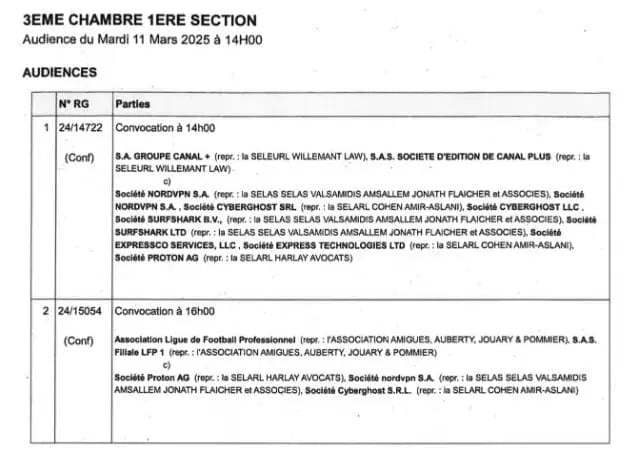
The latest legal action, led by sports broadcaster Canal+ and the Ligue de Football Professionnel (LFP), seeks to impose website blocking measures on some of the most widely used VPN providers.
These include CyberGhost, ExpressVPN, NordVPN, ProtonVPN and Surfshark.
*** Translated with www.DeepL.com/Translator (free version) ***
Site Blocking Requests (Image Source: TorrentFreak)
Rights holders argue that, without the involvement of VPNs, their current blocking efforts will be undermined. They view this as the next logical step in the fight against online piracy, treating VPN providers as intermediaries that facilitate access to illegal content.
A court hearing next month will determine whether these VPN services will be required to comply with the law. However, early signs suggest that the VPN sector has no intention of backing down.
VPNs fight back: A threat to online privacy?
Shortly after the injunction application became public, the VPN Trust Initiative (VTI) – a coalition representing several major VPN providers – condemned the move.
VPN Trust Initiative
Whilst acknowledging the need to combat illegal activities, VTI argues that blocking websites goes too far.
The group warns that these measures could block legitimate content and infringe on individuals’ rights to privacy and freedom of expression.
Since VPNs do not host any content, applying these restrictions would be excessive, they claim.
Switzerland-based ProtonVPN went even further, describing the proposal as a “dangerous attack on internet freedom on the altar of corporate greed”.
The company argues that if the authorities truly wish to combat piracy, they should target IPTV services directly, rather than going after VPN providers.
A legal battle that could go all the way to Europe’s highest court
VPN companies are prepared to fight this battle all the way to the European Court of Justice, if necessary. ProtonVPN has already stated its intention to take the case to the highest court, arguing that the case sets a dangerous precedent for online freedom.
Even if a French court rules in favour of the rights holders, this legal battle is far from over. The outcome could shape the future of digital privacy and anti-piracy enforcement in Europe and beyond.
For now, all eyes are on the upcoming court hearing. One thing is certain – this case will have significant implications for both copyright enforcement and internet freedom in the years to come.
For more information on this story, see the TorrentFreak report.